"Play Isn't Optional. It's Nature's Secret Weapon"
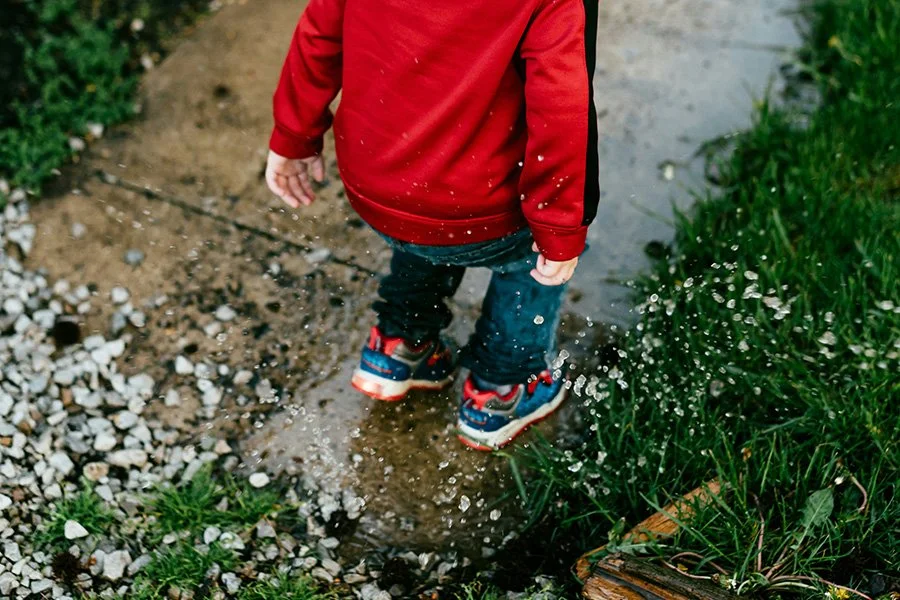
Photo by Jordan Whitt
Dr Peter Gray, author of Free to Learn, talks with playscape designer Rusty Keeler in an episode of the Play Nature Podcast. The key message is that “play isn’t optional. It’s nature’s secret weapon.”
In episode 11 of the Podcast, Rusty Keeler is joined by Dr Peter Gray, professor psychology and neuroscience at Boston College and author of Free to Learn. The discussion is about “what real play looks like, why it’s fading from childhood, and how that’s affecting kids everywhere”. The episode forms part one of a two-part discussion, with the second part, What’s Really Hurting Our Kids: Peter Gray on Why Phones Aren’t the Problem, taking place in episode 13.
Dr Peter Gray has conducted and published research in behavioural psychology, developmental psychology, anthropology, and education, and is the author of a respected introductory psychology textbook. Much of his research focuses on the role of play in human evolution and how children educate themselves through play and exploration when they are free to do so. His book Free to Learn looks at “why unleashing the instinct to play will make our children happier, more self-reliant, and better students for life” and has been translated into 18 languages.
Dr Gray defines play in four ways:
Play is an activity that’s initiated and directed by the players themselves. One of the primary functions of play is that it is the means by which children learn to take charge of their own behaviour and activities: they initiate the activity, solve their own problems, negotiate with playmates, etc. themselves.
Play is intrinsically motivated. It is something you do just because you want to do it. It is not an activity initiated by an outside agent (e.g. an adult) and it has no reward other than the satisfaction of pursuing the activity. Dr Gray says, “How do we discover what we really like to do? We discover it by…trying a lot of things.... There are some things that they really love to do and they play more at that and they get good at it and really develop a deep interest in this… a passion.”
Dr Gray notes that “the third characteristic of play might be a little surprising to some people”. Play is always structured. He says, “People talk about unstructured play. There’s no such thing as unstructured play…. It’s always structured by the child themselves.....So play is not a random activity. You’re not just doing stuff randomly, you’re doing a structured activity. When you’re playing, you’re playing at something that…defines the play. And that means you’ve got certain rules in your head about what you can do and what you can’t do within play.” He notes that the great Russian psychologist, Vygotsky, believed that the primary purpose of play was that it is how children learn to structure their activities, how they learn to behave in accordance with mental rules or social norms, because when you are playing socially, you have to agree on the rules and you have to play in ways that all of your playmates accept that this is the way.
However, although play has structure, the fourth characteristic is that the structure always leaves plenty of room for creativity and imagination, especially young children’s play, which is highly imaginative. It engages the highest order of human thinking, hypothetical, deductive reasoning. This is already observable in the imaginative play of 4-year-old children, and becomes more and more sophisticated over time.
The discussion looks also at the importance of providing opportunity for children to play together. From his observation at alternative schools that provide freedom of choice to children in the learning environment, the majority of children find a kind of balance between sedentary and active, solitary and social play. He says, They’re spending a fair amount of time outdoors and they’re also spending a fair amount of time indoors on the computer. The reason they’re outdoors is because there are other kids to play with outdoors.” He has become convinced that, while he might wish that the love of outdoors was an instinctive, natural choice, he has become convinced that it is not, but is an acquired taste, and the primary stimulus for play for kids is other kids. He says, “We all like a certain amount of individual play, but kids especially really seek and need play with other kids. And you know, when I was mentioning the things that kids learn through play, the most important thing they learn is how to get along with peers.”
Top takeaways from Episode 11 with Peter Gray include:
True play is self-directed, open-ended, and full of joy—no adult agendas allowed.
Kids need independent play more than ever, especially in our over-scheduled, screen-heavy world.
Want happier, more resilient kids? Let them climb, dig, imagine, and roam—play is the path to well-being.
Part 2 of the discussion, in Episode 13, posits the theory that screen use is less damaging in itself than the stressful learning environment that exists in many current schools, and emphasizes the importance of freedom of choice and self-directed social interaction in learning.