Am I Doing this Right? Caring for Babies and Toddlers
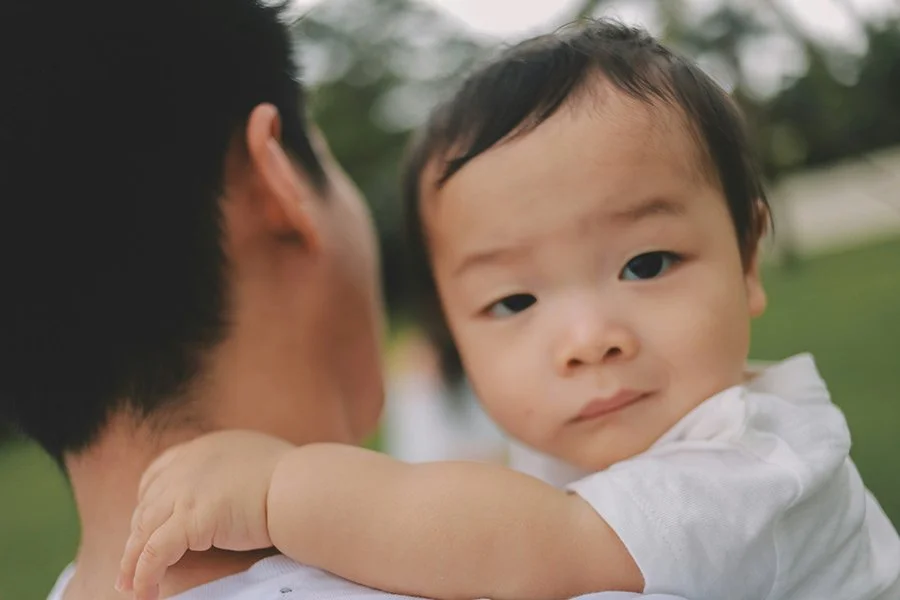
Photo by Hoi An and Da Nang Photographer
Greater Good online magazine has produced a four-part article series on parenting, Am I Doing This Right? The Baby and Toddler Edition, published in November 2025, provides research-backed insights from experts to everyday questions about raising children in the early years.
For the article, Joanne Chen spoke with experts for insights on common issues about which parents with young children have questions. Her findings were that “black-and-white answers rarely exist, and there are often many ways to parent”. The article hopes to provide parents with a sense of reassurance and some ideas for how to move forward, with the note to consult a health professional in further advice is required.
Bridging differences as co-parents: Transitioning from a childless couple to parents isn’t easy, and the feelings aroused might come as a surprise. The key issue “isn’t really about parenting, it’s about the relationship between the two of you. The experts recommend that couples have a conversation before the baby arrives about their expectations as parents, “not only the vision of who’s going to do what, but also what from the families they grew up in do they want to preserve, and what they want to be different”. Then after the baby arrives, the recommendation is to revisit the topic and assess what’s working and what isn’t, and revise the plan as needed. It is also recommended to have a back-up plan for when disagreements do happen (especially in the middle of the night when you are woken by a crying baby), such as letting “one parent make the decision without it becoming policy (decide on who that should be beforehand). Then go back to the issue at a later time, decide whether the last strategy worked or requires revision, and decide together on a strategy for next time.
When Dad feels like a stranger: Work hours and routines often mean that fathers do not get to see their infant/toddler often during the child’s waking hours. Strategies such as reserving weekend mornings for Dad time (and letting Mom have a sleep in) work for some families. Natasha Cabrera, professor of human development at the University of Maryland, College Park, says this is a frequently raised issue. She says, “Dads should know that they are important to their kids turning out as kind, loving adults. They are just as critical as moms to the child – we just haven’t said that out loud about dads enough.” It is important to understand that children are drawn to different parents at different stages of their life, with infants bonding closely to their primary caregiver. The article notes, “Moms…can reassure dads in the meantime by truly letting dads take the lead when they’re at home - even if it isn’t exactly how mom would do it.” It can be helpful to problem-solve beforehand, such as when dad is taking the child for an outing, so that dad feels more confident in dealing with the child on his own.
Helping kids sleep on their own without feeling rejected: If your goal is to sleep separately, then the article suggests “it’s a good opportunity to teach your child how to work through hard situations independently” an important skill as they grow older. If your child has trouble staying in bed, it is important to get to the root of the issue. Listen to what the child shares, then help them to problem solve. Trouble getting to sleep can be helped by having quiet games to play, like “thinking about all the things in his room that are blue, then red, and so on”. Feeling scared can be helped by doing a thorough sweep of the room (e.g. inside each drawer, in the back of the closet) and designating a favourite stuffed toy to “stand watch” through the night. A nightlight can also be helpful in dealing with fear of the dark. It helps to set out the ground rules clearly, such as “how long you’ll stay in his room for tuck-in, and that if he needs you afterwards to call for you, but not to leave the room”.
Diffusing playground disputes with empathy: The article notes, “It takes a certain amount of cognitive awareness to show empathy. For instance, they may not recognize the signs of someone in distress. They might also have competing emotions - and having, say, a special shovel in the sandbox may feel more appealing than giving it up to console the other child.” It is helpful to start building an emotional vocabulary for children as soon as they are verbal and starting to enter social situations with other children by asking the child what they think another child is feeling and identifying the signs of emotions in other children. Modelling empathy is important for children to learn the skill, as is recognition of their role as “helper” when they demonstrate empathy towards others. Empathy skills take time to develop, and when arguments arise, the article suggests it can be helpful to ask problem-solving questions for both children to answer: “What are they trying to have happen”. What have you done in an attempt to get there? Did it work? What can you do instead?” While children are still non-verbal, the advice given is that redirection is the best strategy (e.g. moving a child to the sightline of different toys to choose from) and letting your child know that physical aggression is never allowed.
Avoiding the allure of devices in a restaurant and car: Jacqueline Nesi, assistant professor of psychiatry and human behaviour at Brown University, says parents should not feel guilty about using devices to occupy a child during car journeys or in situations where the child needs to occupy themselves in an adult space for some time. She says the key is to avoid using devices as an “emotional regulation tool”, and to ensure that devices are not interfering with other activities that are important for development, “for instance, whether screen time is getting in the way of sleep or quality time with family and friends”. Before an outing, the article recommends thinking through what your goals are. “If the occasion for, say, a dinner is to celebrate a family member’s birthday, then it makes sense to engage your [child]. Include her in conversation, even if they’re simple exchanges. Keep expectations realistic. For a two or three year old, it helps to come prepared with ideas in mind to prevent boredom and meltdowns, whether it’s and activity everyone at the table plays while waiting for the food to arrive, or books and games to keep the time together fun.”
An un-scary way to talk about death with a two year old: Jessie Borelli, professor of psychological science at the University of California, Irvine, says, “Parents react to things that happen in their lives, and children react to their parents’ reactions. We often underestimate how in tune children are to our emotional states.” Borelli recommends that the best way to help children cope with death is to talk about it before it happens, to begin to lay the groundwork for an understanding that death happens and is a natural part of life. It helps to focus on practical issues that will affect them directly (e.g. you will still be able to go to your grandparents’ home to visit gramps, but granny won’t be there any more; your auntie will pick you up every day after school, so you don’t have to worry). The article suggests that, for young kids, it is helpful to have photos on display, or other physical mementos of the person that they can touch. Suggested supplements include the Sesame Street episode on the topic; older kids might appreciate a book like The Invisible String.