The Conversation: An Assessment of Outdoor Play Regulations
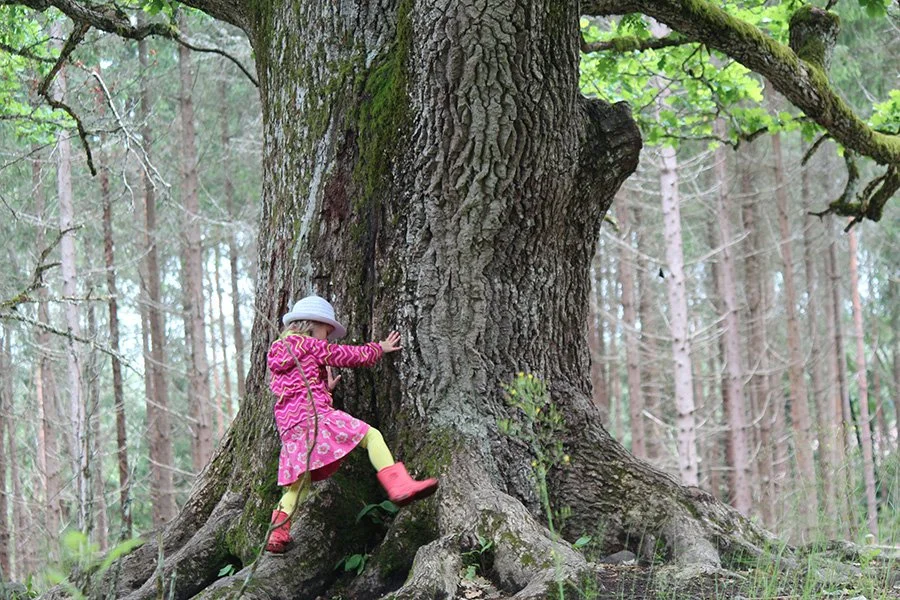
Photo by Tania Malréchauffé
A report from The Conversation reviews provincial and territorial outdoor play regulations and finds that “support is lacking and un-coordinated across child-care licensing regulations, curriculum frameworks, standards of practice and workforce preparation.”
The report shows that every province and territory in Canada has acknowledged that “outdoor and land-based play belongs at the heart of children’s early learning”. However, “a study about regulating outdoor and land-based early learning programs across Canada, commissioned by the Lawson Foundation, words supporting outdoor play and land-based learning are unambiguous, but the policy infrastructure tells a different story.”
Licensing Regulation: All provinces and territories mandate outdoor play, requiring daily time minimums, fenced spaces, standardized and approved surfacing for play areas, and mandatory line-of-sight supervision for licensed indoor programs. However, “because outdoor and land-based programs cannot meet indoor facility requirements, they cannot obtain a licence, and therefore cannot access earmarked federal funds.” For both forest-based programs and programs in many Indigenous communities this is a significant problem, as the report notes that “land-based pedagogy is absent from regulations nationwide”.
Curriculum Frameworks
• no envisioning of outdoor environments as learning contexts
• no risk-benefit guidance
• no outdoor-specific competency expectations
Post-Secondary Preparation
• no defined professional competency for early childhood educators in outdoor or land-based practice
• only about 7% of early childhood education programs include any outdoor element
• only a tiny percentage of college programs include mandatory Indigenous studies coursework
The report notes the following six areas of disconnect:
1. Curriculum frameworks are consistently more progressive than the regulations governing delivery. (The gap is widest in the territories.)
2. Indigenous land-based pedagogy remains absent from regulations and standards of practice, even where frameworks, in BC, the Northwest Territories and Nunavut, affirm Indigenous ways of knowing most strongly.
3. Ecological literacy is absent as a defined educator competency everywhere in Canada, despite the commitment, through Canada’s National Framework for Environmental Learning, to building the knowledge and agency required for climate action.
4. Risk-benefit assessments are absent from licensing requirements everywhere. The report notes: “This is despite strong evidence that children denied adventurous, challenging play miss chances to build resilience and self-regulation, and despite the availability of Canadian toolkits built to support exactly this shift.”
5. Children’s rights under the UN Convention on the Rights of the Child — including Article 31’s right to play with risk and adventure — are acknowledged in frameworks but absent from daily regulatory practice.
6. No accountability mechanism requires any of the four components to align.
The report cites international models of practice from Germany, Denmark, Scotland, Australia, and as close as Washington State to provide functioning examples of how outdoor play can be incorporated into regulations and practice. The report recommendation is to address the four areas of licensing regulations, curriculum frameworks, standards of practice and post-secondary preparation simultaneously to establish “government-led accountability mechanisms”, integrated at federal and provincial/territorial levels, developed in “genuine nation-to-nation partnership with Indigenous governments”.