ParticipACTION Children and Youth Report Card 2026
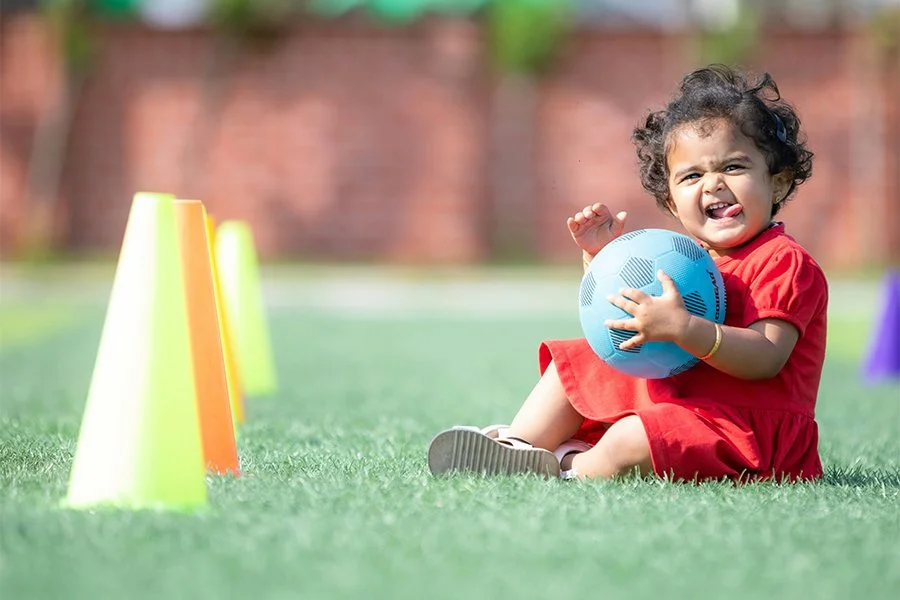
Photo by Anil Sharma
The ParticipACTION Children & Youth Report Card 2026 Rallying for Resilience: Keeping Children and Youth Active in a Changing Climate progress report is now available.
The ParticipACTION Report Card on Physical Activity for Children and Youth is the most comprehensive assessment of child and youth physical activity in Canada.
Since the release of the 2024 Report Card, there has been new and important data which has been incorporated into the updated progress report for 2026.
The progress report includes updates on:
Overall physical activity
Active play
Active transportation
Organized sport
Sedentary behaviours
Sleep
This year’s report focuses on keeping children and youth active in a changing climate. The report notes, “Unfavourable weather and climate conditions like heatwaves, heavy rain and smoke-filled air can lead to recesses and outdoor sport and recreation activities being cancelled, and more time spent indoors being sedentary with increased exposure to screens. Given that only 39% of children and youth (five to 17 years of age) in Canada met the recommendation of 60 minutes of moderate-to-vigorous intensity physical activity per day, earning them a grade of D+, how can we help children and youth face adversity, move more and build resilience to future-proof the next generation?”
There is a free downloadable sheet of tips for parents and guardians to support them in promoting an active lifestyle for the children and youth in their care, available at: https://www.participaction.com/wp-content/uploads/2024/05/Tips_for_parents_support_networks_PAC_CY_Report_Card.pdf.
Key points from the progress report include:
As Canada recovers from the residual effects of the pandemic on physical activity, such as lockdowns and the pausing of organized sports, families, schools, and organizations have worked to revive physical activity opportunities. This year’s grade for household support for physical activity has increased from a “C” to a “C+”, while schools remain at a “B-“ and organized sports have improved from a “C+” to a “B”.
Unfortunately, recovery hasn’t progressed at the same rate for all as the Report Card highlights only 31% of girls, compared to 57% of boys, are meeting the physical activity recommendation. Research also shows that kids from low-income neighbourhoods rely more on outdoor spaces for play and physical activity due to a lack of family resources. The report predicts that rising temperatures and unpredictable weather events affiliated with a changing climate could increase the potential for even greater disparities among equity-challenged groups whose ability to be active depends heavily on favourable weather and environmental conditions.
New insights from the progress report:
Girls are less likely than boys to meet the physical activity recommendation at all ages, with the gap widening during adolescence.
Compared to youth, children are more than twice as likely to meet the physical activity recommendation, but many children and youth are also close to achieving the recommended levels.
Children’s physical activity levels remained relatively stable between 2007 and 2024; however, recent data (2022–2024) indicate that youth are far less likely to achieve the physical activity recommendation than they were prior to the COVID-19 pandemic.
Although only 1 in 5 children and youth reportedly get 2 hours per day of active play, participation nearly doubles when considering those who participate in an average of 1 hour per day of active play. Youth, particularly girls, report the lowest levels of active play.
Fewer than half of children and youth reportedly use active transportation.
Organized sport participation rates continue to decline as girls enter youth.
Youth are less likely than children to meet the screen time recommendation, with little difference between boys and girls.
Most children and youth are getting enough sleep, but youth are less likely than children to meet sleep recommendations.