Rich Materials Support Children’s Natural STEM Learning
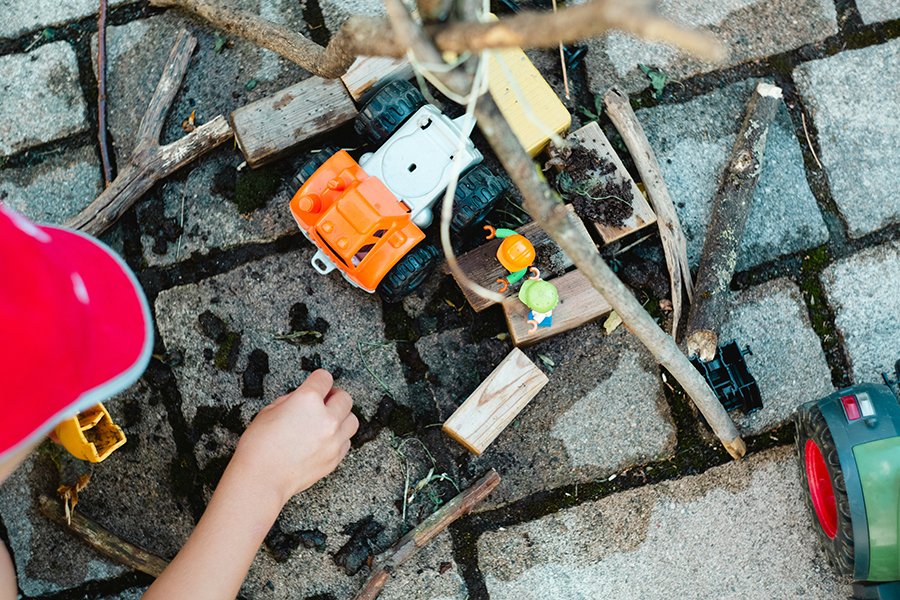
Photo by Markus Spiske
A Community Playthings article explores how to support STEM experiences for infants and toddlers.
Sherri Peterson has spent the past ten years defining the question, “How can babies do STEM?” She has observed infants and toddlers investigating the properties of material, discovering or creating a problem based on their investigation, using old strategies or devising new ones to solve the problem that interests them, combining strategies, observing what works and what does not work, and then trying again – all actions foundational to STEM learning.
Her team’s work at the Iowa Regents’ Center for Early Developmental Education to develop infant and toddler STEM curriculum aligns with the definition of STEM provided by the Boston Children’s Museum:
· Science is a way of thinking. Science is observing and experimenting, making predictions, sharing discoveries, asking questions, and wondering how things work.
· Technology is a way of doing. Technology is using tools, being inventive, identifying problems, and making things work.
· Engineering is a way of doing. Engineering is solving problems, using a variety of materials, designing and creating, and building things that work.
· Math is a way of measuring. Math is sequencing (1,2,3,4…), patterning (1,2,1,2,1,2….), and exploring shapes (triangle, square, circle), volume (holds more or less), and size (bigger, less than). (Brownrigg et al., 2013)
The author stresses the value of an educator’s selection of materials in order to provide high-quality STEM experiences for young children, arguing that recent work in paediatric neuroscience indicates “high quality experiences that include sensory, motor, cognitive, and relationship-building opportunities support neural development, while children who are not afforded such brain-building experiences may not develop these neural pathways”.
Working from a base of Piaget’s theories, the team take a considered approach to the materials they will offer. “Holding the materials in our hands and manipulating them helps us understand the possibilities they offer in sense making in regard to properties of materials for an infant and toddler…..Intentional teachers organize spaces in their classrooms so that the sensory needs of all children can be met….Teachers then observe children as they approach a new experience and take note of the way each child makes discoveries about the materials.” The article explores in more detail the ways in which infants and toddlers engage with materials.
Peterson recommends the use of “Treasure Baskets” to engage infants and toddlers in sensory play. Treasure Baskets can have a theme, and can function as “loose parts for beginners”, with everyday objects used in interesting ways. They contain a selection of thoughtfully curated materials. She gives as an example a winter theme, including such objects as snowflake-shaped ornaments, jingle bells, mittens, a fuzzy cap, an indestructible book with winter images, etc. The Treasure Basket can also be individualized to cater to a particular child’s areas of interest. She notes that Treasure Baskets can be both indoor and outdoor experiences, commenting, “Because they are designed to be part of an adult-supported experience, natural materials can be selected so that children can investigate the natural world with just the right amount of risk”.
The author emphasizes the value of blocks and mini unit blocks, stating, “These timeless materials are the quintessential loose parts with no end of potential for STEM-rich play…. Even children who are not yet sitting are curious about how they can make a stack of mini unit blocks topple over with a ‘bang’ when they move their arms or legs. Unit blocks are ripe with possibilities for science, technology, engineering, and math play.” Quoting the research findings of Wellhousen & Kieff (2001, p.65), Petersen details the richness of cognitive development, social-emotional regulation, interactive changes that support both emotional regulation and language development, vocabulary enrichment, understanding of balance and stability, spatial ability, exploration of math concepts, and creativity.
The article concludes with a discussion of finding the “sweet spot” in intentional teaching. “When children have multiple experiences with the same materials over time, we often see a sort of resolution to the problem children have set themselves. Our observations about what children do with carefully selected materials when adults provide just the right amount of support is that they often use materials in creative and interesting ways. Intentional selection of materials results in children exploring materials and making predictions based on observations (science). They use the materials to invent tools and build (technology). They solve problems in building with a variety of materials with different properties (engineering). They engage with measurement, sequencing, patterning, and shape as they work with open-ended materials (mathematics).”