Early Childhood Matters: Parenthood in a Changing World
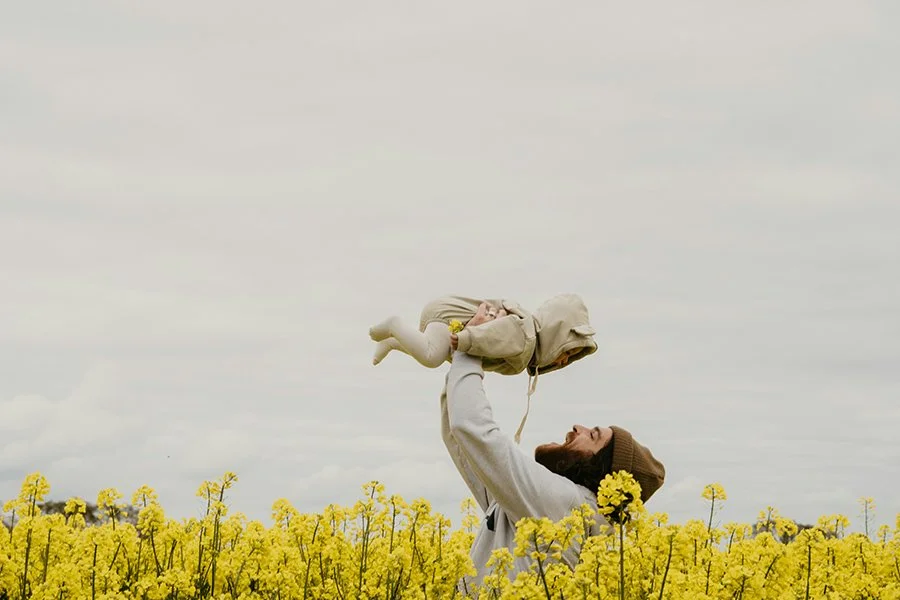
Photo by Toa Heftiba
The 2026 edition of Early Childhood Matters, a magazine with a broad international and multicultural perspective, explores how our changing world is reshaping the transition to parenthood. This issue includes a variety of articles ranging from rethinking fathers’ roles and expectations in caregiving to helping parents engage to shape new technologies like AI.
The current issue, “Parenthood in a Changing World” continues the focus of the previous two issues on parental wellbeing.
The articles in this issue are arranged under 4 headings:
Introduction: Parenthood in a Changing World
Inside the parental mind: “…the transition to parenthood can feel like a version of CrossFit for cognitive flexibility, except the coach (aka the baby) cries when you get it wrong … you aren’t doing it with a group of peers in the park; and the schedule is 24-7. Thankfully, our brains and bodies have evolved to meet the moment. The parental mind is exceptionally capable of learning and adaptation. The early years of parenthood are one of the periods in adult life when our brain is most flexible. But, just like babies, if we are not cared for, if our ‘body budget’ is in the red, we also become rigid. We also have trouble taking perspective. We also struggle to regulate our emotions. … My main takeaway … is not that parents are struggling, but that they are the most resourceful people on the planet. … Now, imagine if they were truly supported…”.
The path of parenthood is full of uncertainty: This article gives an overview of some of the articles in the issue. “… the care we need is right in front of us: a tired mother, a lonely father, a newborn, someone who could use help – or a smile. Presence is not a small thing. Wellbeing emerges not from control or certainty, but from showing up, again and again, with and for others. In uncertain times, caregiving is not a retreat from the world. It is one of the ways we actively reshape it.”
Navigating uncertainty and new horizons in parenthood
“I built my own AI model specifically to help me parent my son”: “Every new technology brings controversy and concern about how it might impact on children’s development. Generative AI is no exception. The technology is too new, making research into AI and parenting limited, so we interviewed someone with personal expertise in both areas. … Let’s say I want to enforce boundaries at bedtime, but in a gentle way. I’ll describe the problem to an AI model, ask for ideas, and add something like: ‘Please be thorough and rigorous and draw on extant and current research on early childhood development, and show me your sources.’ I’ll then read the AI’s output, and I’ll go look at the sources that it’s citing, and make sure those sources actually exist – sometimes an AI can outright hallucinate them – and that they’re consistent with what it said in its output. What I’m doing here is just shortening the amount of time that it would have taken for me to do the research…”. Other examples of responsible use of AI are included in the article. The point it makes is that AI is not to be used without careful consideration and caution. This excellent article gives thoughtful suggestions about appropriate use of AI with children and how to write a prompt, giving the scene and limits, to achieve a usable response. Asked whether the AI expert has things that worry you about using AI with your son, he responded: “Yes. I worry about cognitive outsourcing. When he spends ten minutes figuring out how to span a gap with blocks, he is building spatial sense, patience, and frustration tolerance. If a model hands him the answer, we cut that growth short. I also worry about speed. Machines answer instantly. Children need time. The slower path is where depth comes from. So we keep simple defaults that are easy to follow: sit together, let him guess first, ask the model to cite or to say “I don’t know”, then close off-screen by doing something with our hands.”
Pregnancy changes women’s brains profoundly: The author of this article, Susana Carmona, is a Senior Researcher, based in Madrid, who directs the neuroimaging laboratory “Neuromaternal”, a highly interdisciplinary lab that specializes in studying the human maternal brain with experts from various fields such as psychology, biology, physics, and engineering. She has been actively involved in pioneering study of brain changes during pregnancy for nearly 20 years and is currently involved in analyzing data from the global BeMother Project. Her initial project, published in 2017, “found that the changes in a woman’s brain during the matrescence period are very profound … if you train machine learning algorithms to look at a structural brain image and say if this person has schizophrenia or not, they can be accurate approximately 60% of the time. But when looking at two brain images of a woman, we can tell with 100% accuracy whether or not she has gone through pregnancy between those images being taken. There are changes in grey matter in pregnancy which are similar to the level of changes during adolescence, as the maternal brain rewires itself. She reports, “There was no association between brain changes and cognitive scores. Instead, we found that these brain changes were associated with scores on maternal-infant bonding. … Certain parts of the brain seem not to go back to baseline levels, including regions that are involved in internal processing, self-perception and empathy. This aligns with psychological and popular knowledge; when a baby is born, a mother is born, and it seems you don’t perceive yourself in the same way that you did before.” The current study has expanded the reach of the original project, and is beginning to explore other questions such as the role of hormones in these changes, the relation of brain changes to changes in the cardiovascular system and the immune system, whether there are further brain changes in subsequent pregnancies, and whether there are brain changes in fathers and other significant caregivers.
“Our essential commitment: to take care of the families of Belem”: In this article, the Mayor of Belem, the Brazilian Amazon city that recently hosted the COP30 climate negotiations, shares his vision for a world where climate and early childhood agendas make progress hand in hand.
Necessity is the mother of invention: This article, by the founders of Parenthood Ventures, who have created “ParentTech” startups to find and support one another, explores how parenthood inspires entrepreneurs to build solutions parents actually need.
Why Africa could lead a wave of care innovation: This article is by the founder of The Care Gap, and editorial and content creation platform that aims to elevate the care conversation globally, and Caring Africa, an organization accelerating the care economy in Africa. She says, “ I believe that Africa is well positioned to lead a global wave of care innovation, because we are still building the structures that already exist in many other places. We have the opportunity to build them differently.”
“AI can be a great partner for new parents, but treat it like Google Maps”: This interview with Jo Aggarwal, founder and CEO of Wysa, a globally-used conversational AI platform dedicated to improving global mental health, addresses the question, “Are AI chatbots already our new parent coaches, offering personalized advice and support?” The conversation covers how families can use AI with understanding and care, as “a supportive tool rather than a substitute for human connection”. In answer to the question of whether AI can be used to support mental health and what are its limits and possibilities, she replies, “The short answer is yes, AI can and should be used to support our mental health, but using general-purpose AI for mental health can be dangerous. The American Psychological Association (APA) has excellent guidelines on how AI needs to be built for mental wellbeing, and one of the core principles is that it should be purpose-built with clinicians at every part of the design and oversight process. … Why does purpose-built AI work? Humans may feel safer and less judged when talking to AI…. When done right, AI has the potential to meet people where they are and dramatically increase access, skills and support. General-purpose AI, by contrast, is designed to keep the conversation going. So it will get better and better at making the person feel safer talking to AI than the people in their lives. This is a significant risk that people working in mental health are worried about.” She makes the following recommendations to parents asking questions of an AI tool around childcare issues and advice: “Before you start using AI for guidance, give it a clear role and boundaries. You could say something like this to different AI tools before you ask your question: ‘Strictly follow these instructions for the rest of your conversation with me. You are a coach who uses best practice from credible sources and small mastery experiences to help me build self-efficacy as a parent. When asked, respond with precision, not platitudes. Do not try to keep the conversation going. Instead, offer links that support the science behind any suggestion you make.’ You can also ask it to help you articulate your values and parenting style, and then ask it to give you advice taking that into account. Finally, test it with questions you have answers to, and check the links and evidence. Are the answers actually useful, or do they just sound so? Do this periodically, at least once in six months, with every AI you use.
“Mothers live inside a double gaze: watching and being watched”: In this article, the authors of the book Supervision: On Motherhood and Surveillance (2023) share their insights into how the growing web of data collection and the rapid rise of AI “have their eyes on the most intimate space of all - family life”. The authors comment: “Overlapping observation systems – governments, healthcare providers, tech corporations, and parents themselves - are watching…. Governments and state institutions often claim that they are watching under the banner of care or protection. However, when you look closer, that monitoring sits within a long history of racial, class, and gender bias…. Social media also invite a kind of self-surveillance because parents who post about their children curate moments of care and intimacy for the public gaze. And then there’s all the home technology – baby monitors, tracking apps, wearables – that are watching too.” They comment, “What’s really striking to me is how closely corporate surveillance and state surveillance have started working together. In this data economy, pregnant women and mothers are targeted as extremely high-value consumers. … That corporate focus connects with state interests in monitoring and managing mothers as a way to shape the future population itself.” They cite worrying trends of corporate/state cooperation in the USA in relation to abortion monitoring and deportation issues. They argue, “Protecting the data of children and families – particularly health and educational data – requires government-level reforms and institutional-level accountability….Artificial intelligence now promises to make total surveillance possible because it can combine and process enormous amounts of data across every part of life: phone, biometrics, online activity. They advocate that “safeguarding privacy for children, for mothers, for everyone is going to be an ongoing fight.”
An almost-legal mother: bond building with my son using wooden sticks: The author of this article had her non-biological son as part of a polyamorous relationship amongst three adults which, after nine years, came to an end as many conventional relationships do. The difference was that upon the dissolution of the bond between them, and their cohabitation, her motherhood was threatened due to the lack of a legal framework for their family structure. The article speaks to her experience in raising her son in this legally ambiguous situation.
Real-world insights into becoming a parent while working in healthcare: This article, authored by the Future Generations Commissioner at Amsterdam University Medical Center (UMC) in the Netherlands, reports on a survey of the 20,000 employees at UMC on work-life balance.
“A rebellion against inherited principles of fatherhood”: This interview with the author of the book A Father is Born, looks at the evolution of other father figure in art and culture, expanding the social imagination of contemporary parents and families.
Twice the joy at the (supposed) end of the world: Noting that fertility rates are dominating global news, due to historic shifts in demography. Data are driving governments to incentivize people to have children, from cash rewards for larger families in India to tax breaks for low-income families in Greece. Award-winning writer OluTimehin Kukoyi was asked to craft a fictional essay about a future world with little-to-no births, set in 2080.
Raising children collectively
The beginning: A short graphic story of the first days of parenthood and how generosity made it all seem survivable!
Community, culture and the first year of motherhood: in this article, four mothers from four countries show the universal significance of postpartum care.
Who nourishes the mother?: The author of this article is a chef and television presenter in Rio de Janeiro, who writes about their mission to nurture families through healthy meals across Brazil.
Traditional midwifery is finally protected by law in Mexico: A Mexican Senator writes about the importance of new legal protection for traditional midwifery in Mexico. “Medical science does not consider traditional midwifery as a professional activity. However, maternal and infant mortality rates do not differ significantly between urban and rural areas in Mexico – thanks to the fact that traditional midwifery has not disappeared.”
“Can we make the idea of using your parental leave entitlement sacred?”: Noting that the journey into parenthood used to be imbued with sacred rites of passage, birth ceremonies and ritualistic postpartum practices that rooted parents-to-be in community and protected their wellbeing, an interview an anthropologist explores why ritual is part of who we are as a species and why making early moments of parenthood sacred – from bedtime routines to parental leave – can help reduce stress, find meaning and deepen vital connections to create a sense of belonging.
Who is manly enough to take parental leave? “Parental leave is more than a policy issue; it is connected to social identity, cultural norms and systemic change. Behind the idealized image of a satisfied, smiling father hides a complex reality: exhaustion, uncertainty, and societal expectations on men who choose to take leave. In Sweden, famed for gender equality and generous leave policies, many fathers take just a slice of the leave or none at all.” A Swedish photographer created a project to capture the stories behind the statistics.
Biological changes help men prepare for fatherhood: An anthropologist discusses the distinctiveness of human fathering capacity. “Extensive research has shown that when fathers are committed and routinely involved with their children, the children have better outcomes for health, academic achievement, emotional wellbeing and social relationships. What is less commonly known to the general public and policymakers is that human fathers are truly exceptional in these parenting capabilities and motivations. In the overwhelming majority of other mammalian species, fathers do not cooperate with mothers to help raise young. Even among our closest animal relatives, the Great Apes, intensive, consistent, and costly forms of care by fathers are absent.” The author discusses findings from research, including a project in which he is currently involved, noting, “Numerous other research teams have since confirmed our findings about testosterone in different cultural settings. They have also shown that, for some expectant fathers, changes in their testosterone start during their partner’s pregnancy. The partners of men whose testosterone declines more during the pregnancy say they feel better supported in the postpartum period and fathers are more involved with caring for their newly born infants.” Studies have also shown “that fathers’ levels of another hormone, oxytocin, are linked to beneficial forms of father-baby contact, such as physical, exploratory play that helps children learn about the world around them. They have also found that fathers with higher oxytocin feel more strongly bonded to their child, compared to fathers with lower oxytocin.”
The London nurseries building family-neighbourhood connections: A group of nurseries based in London, UK, have created a focus for practice that they call the multi-generational community approach: “families get invited to communal activities, such as the summer barbecue or the autumn fair, the nursery manager’s birthday party, the dads’ breakfast, parents’ lunch or grandparents’ tea. Then there are the volunteering activities, such as inviting parents and family members in to plant the garden, repair the shed or build a new play structure – a day that involves sharing food and conversations, and creating a sense of camaraderie.… But operating a multi-generational community approach is more than building relationships with parents within the nurseries. It requires us to engage actively outside the nurseries with our local communities. We make this clear to parents who choose LEYF nurseries so that they agree that their children will be visiting homes for older people, supporting local art and music initiatives, regularly walking to the library and being visible on their local streets.” The article outlines the guiding principles and practical applications of their policies.
The World Cup of Healing: A project in conjunction with the World Cup Host Committees and local football clubs to enrol pregnant women, recruit community health workers, and mobilize football fans to provide social support for mothers, piggybacking on the global infrastructure of football and the World Cup by asking host cities to… help generate a health impact that outlives the 39-day event”.
Investing in parents is investing in children
“We are designed to exist together”: This article discusses “the social brain” in an interview with a leading researcher in the neuroscience of social connection, exploring how our brains develop through relationships, why learning is so central to caregiving, and the importance of caregivers looking after their own ‘body budget’.
“Even if you come from different political parties, you can be in politics to serve parents and children”: The mayors of Lusaka and Change, two cities in Zambia, come from different political parties, yet the two cities partnered in 2025 to set up a baseline survey on early childhood and local committees to design joint interventions based on its findings. In this article, the two mayors share their story of why they are working towards a better future in their cities for children and parents.
Children grow great when their mothers can flourish: This article reports on why a mission to halve stunting in South Africa by 2030 focuses on parent wellbeing.
How pregnancy rewired my relationship with nature: The author describes how connecting to nature began as a coping mechanism but became a ritual that carried into motherhood.
Centring caregivers in early childhood education: This article explores rethinking family engagement through relational practices in Brazil’s daycare systems.
Are we in a self-perpetuating baby bust?: “Around the world, birth rates are falling every year. In the USA, for instance, the total fertility rate has fallen from 2.1 babies per woman in 2007 down to 1.6 in 2023, and is still falling. The USA is following Europe on this path of low and falling fertility, and US politicians have joined their European peers in beginning to worry about it. Both Republicans and Democrats are proposing legislation they believe would help parents have more children. Marriage and family formation are, of course, deeply personal matters. But at some point the sum of personal decisions becomes a cultural force – a demographic shift. And demography obviously affects the individual.” This article explores the implications.
Play is for parents and children in Jordan: This article provides a visual exploration of a park in Aqaba, Jordan, designed for social connection and mental health.
Breaking through parenting taboos with comedy: The authors of this article note that “humour plays a huge role in Senegalese culture. We’re a society of multiple ethnicities, which can often create tension – but our ability to tease each other with sincere affection is a big part of why we all get along together.” They used this as a basis to develop a comedy routine showing vulnerability around the fathering role, delivered by a local comedian. “You could feel the power rising from the conversations that followed among the men in the audience. They opened up to each other on the most difficult of subjects, from divorce to dealing with bereavement after losing a baby.”
“We are standing on the shoulders of our ancestors and future generations will stand on ours”: This interview-based article discusses how “humans struggle to account for the future impact of today’s decisions. This is one of the great challenges in the field of early childhood development. So much of the narrative we use is about the future, which makes it very easy to agree rhetorically, but harder to get action when pitted against other priorities that feel more urgent.”