Supporting Early Numeracy at Home
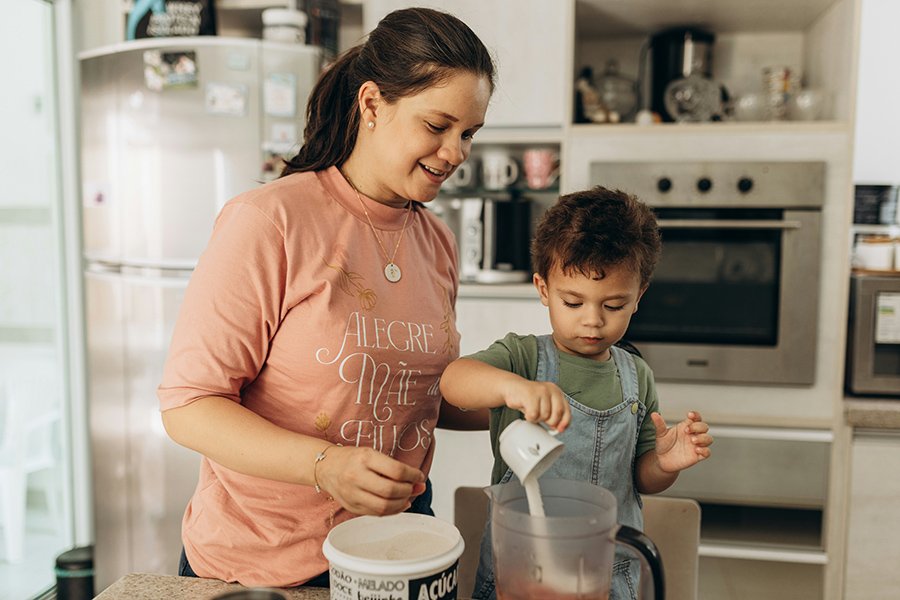
Photo by Jonathan Borba
Theconversation.com offers ideas to help families support their children’s early mathematics learning at home.
This article offers good news to parents of children entering kindergarten and grade 1 at school: there are lots of ways of helping prepare children for mathematics learning that do not require worksheets or formal lessons. “Children develop mathematical knowledge through conversations, everyday experiences and even while playing – counting the stairs, comparing which glass has more juice, building with blocks, noticing patterns” or even figuring out whether everyone in the group has an equal number of treats at snack time share out.
The article by Dr. Ozlem Cankakya, Associate Professor, Early Learning Curriculum Studies, MacEwan University, offers a number of suggestions:
Learning the verbal counting sequence is complicated, and varies in complexity from language to language. For example, Mandarin Chinese follows the base-10 structure quite closely, whereas European languages can be less predictable, so children learning in English or French may need additional practice with the less predictable parts of the counting sequence.
Adults’ attitudes matter to children. “This doesn’t mean parents need to love mathematics or know all the answers. It means they should avoid presenting mathematics as frightening or as an ability people either possess or lack” e.g. ‘I was never good at math.’ Helpful messages are those such as: “Numbers can be tricky sometimes. Let’s figure it out,” presenting challenges as a natural part of learning.
Make mathematics part of everyday life. Showing children how math is part of their everyday experience, such as in cooking, counting spoonfuls, measuring ingredients, dividing food into equal portions, or discussing whether a container is half-full. Everyday objects such as buttons, lids, stones, sticks, cardboard tubes and blocks can be sorted by size or shape arranged into patterns, counted, compared and used for construction. The author notes, “In our play studies we found that these versatile play materials encourage spontaneous opportunities.
Choose mathematics apps carefully. “Parents should look for applications that adjust to children’s levels, minimize distracting features, use language the child understands well and provide meaningful feedback (rather than simply announcing right or wrong answers). These apps should supplement rather than replace hands-on exploration and conversations with adults.” The author stresses that apps should only supplement, not replace, hands-on exploration and conversations with adults, and describes how useful playing with blocks can be to extend digital learning into the real world. “Children can create and extend patterns, compare the size and shape of structures, experiment with balance and solve problems as they build.” Research indicates that block play supports development of executive functioning in children, the skills children use to pay attention, plan, remember information and regulate their actions, all of which play an important role in children’s academic learning.
Children do not need home worksheets. The author stresses that the key to foundational math is “providing frequent opportunities to encounter numbers, quantities, shapes, patterns, measurement and spatial relationships” and giving children the language to talk about what they notice. The author encourages to have fun together with their children: “Count together. Cook together. Build things. Play board games. Ask questions. Encourage children to make mistakes, and discuss how that is where learning happens.”